

Fight, Flight, Freeze, and Fawn: Understanding Trauma Responses
Maybe you snapped at someone over something small and couldn’t figure out why. Or you froze in a moment when you wished you could speak up. Or you found yourself smoothing things over, apologizing, going along with what everyone else wanted — even when it cost you. These aren’t character flaws or signs of weakness. They’re your nervous system doing exactly what it evolved to do: protect you.
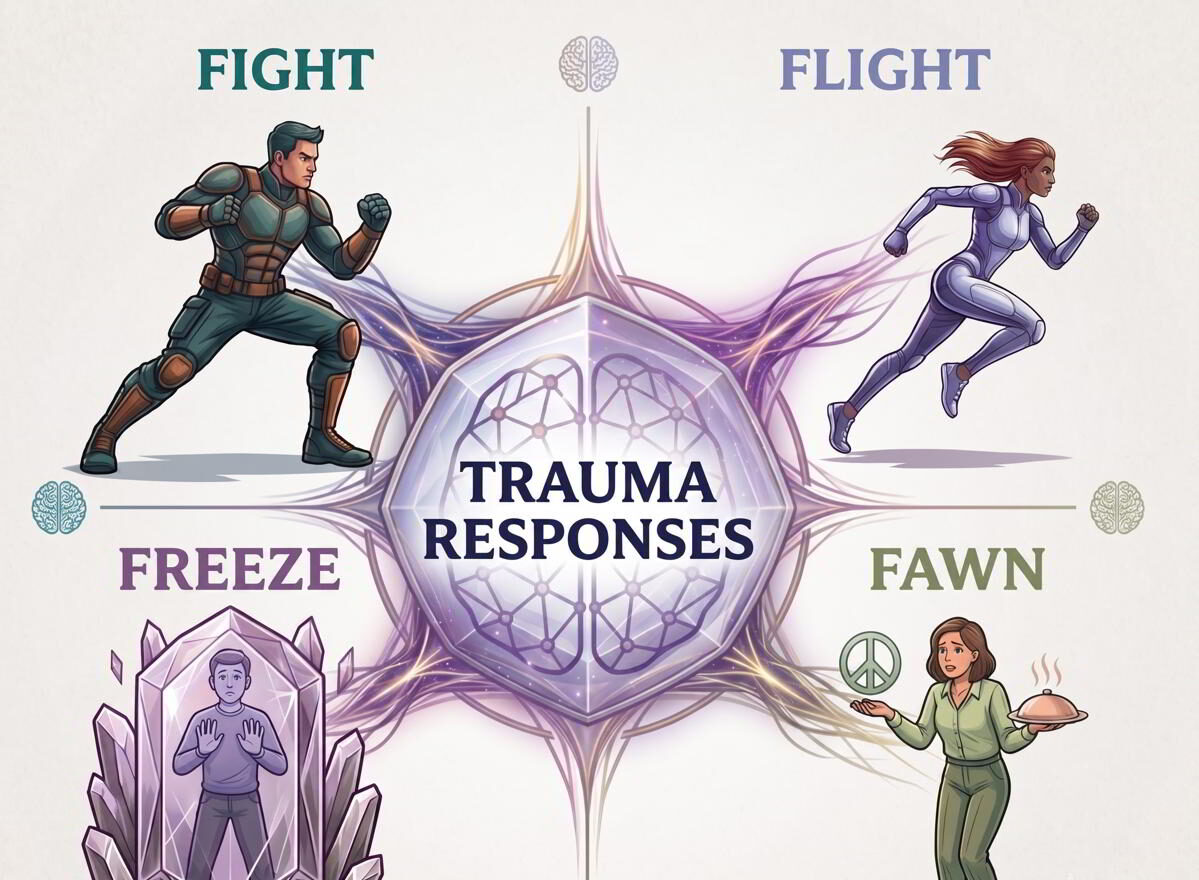
Fight, flight, freeze, and fawn are the four trauma responses — automatic survival reactions that kick in when your brain senses danger. PTSD is a mental health condition that some people develop after experiencing or witnessing a traumatic event, and understanding these responses is often a first step toward healing. The reassuring news is that with the right support, these patterns can shift.
Where Trauma Responses Come From
Deep in your brain sits a small structure called the amygdala, which acts like a smoke alarm. When it senses a threat, it triggers your body’s survival system faster than conscious thought — flooding you with stress hormones, quickening your heart, and readying you to react before you’ve had time to think.
This system is brilliant in a genuine emergency. The trouble is that trauma can leave the alarm oversensitive, going off in situations that aren’t actually dangerous — a raised voice, a certain look, a reminder of something painful from the past. Your body reacts as if the original threat were happening all over again. That’s why these responses feel automatic: they’re rooted in biology, not choice.
Fight
The fight response shows up as a push to confront or overpower the threat. It can look like anger, irritability, defensiveness, or a sudden need to argue or control a situation.
You might notice a clenched jaw, a racing urge to lash out, or a surge of energy that’s hard to contain. In everyday life, this can appear as snapping at loved ones, feeling constantly on edge, or reacting far more intensely than a situation seems to call for.
Flight
The flight response is the drive to escape. Rather than confront the threat, your system pushes you to get away from it — physically or otherwise.
This can look like restlessness, an inability to sit still, or a constant urge to stay busy so you never have to feel uncomfortable. Some people experience it as anxiety or panic; others as overworking, over-scheduling, or avoiding certain people and places entirely. The common thread is a deep pull to be anywhere but here.
Freeze
The freeze response happens when neither fighting nor fleeing feels possible, so your system essentially hits pause. You may feel stuck, numb, or unable to move or speak.
In daily life, freeze can look like zoning out, procrastination, indecision, or a sense of being disconnected from your own body or surroundings. It’s often misread as laziness or avoidance, but it’s really a protective shutdown — your nervous system’s way of bracing when escape and confrontation both feel out of reach.
Fawn — the People-Pleasing Response
The fawn response is the least understood of the four, and for many people it’s the most familiar once they learn to spot it. Fawning means trying to stay safe by pleasing, appeasing, and accommodating the source of stress. Instead of fighting or fleeing, you soothe.
It often takes root early, especially for people who learned as children that keeping others happy was the safest way to avoid conflict, criticism, or harm. Over time, that survival strategy hardens into a way of moving through the world.
Fawning can look like:
- Chronic people-pleasing — putting everyone else’s needs ahead of your own, automatically
- Difficulty saying no — agreeing to things you don’t want, then feeling drained or resentful
- Losing track of your own wants — struggling to even name what you feel or need
- Over-apologizing — saying sorry for things that aren’t your fault
- Conflict avoidance at any cost — abandoning your own position to keep the peace
Because fawning often looks like kindness, agreeableness, or being “easy to get along with,” it frequently goes unrecognized — praised, even — while quietly costing you your sense of self. Naming it is often a powerful turning point.
Why You Can’t Simply “Choose” Your Response
If you’ve ever scolded yourself for freezing when you wanted to act, or for fawning when you wished you’d stood firm, it helps to understand this: these responses aren’t decisions. They’re generated by the parts of your brain that operate below conscious awareness, faster than deliberate thought.
You don’t get to pick which one shows up, and you can’t simply will yourself out of it in the moment. This isn’t a failure of character or willpower. Recognizing that these are automatic, protective reactions — not choices — is what makes self-compassion possible, and self-compassion is where real change begins.
How These Show Up in Daily Life and Relationships
Trauma responses rarely stay tidy. They spill into work, friendships, and especially close relationships. A fight response might turn small disagreements with a partner into explosive arguments. A flight response might have you pulling away or staying so busy you avoid intimacy altogether.
Freeze can leave you shutting down mid-conversation, unable to say what you feel. And fawning can quietly erode a relationship from the inside — you keep the peace on the surface while resentment builds underneath, and your partner may never even realize your needs are going unmet. Recognizing your patterns is often the first step toward changing how you relate to the people who matter most.
Healing: EMDR, Trauma Therapy, and Somatic Approaches
Here’s the hopeful part: trauma responses are not permanent. Because they live in the nervous system, they can be gently retrained with the right support. Several approaches help:
- EMDR. EMDR therapy helps your brain reprocess the memories driving these reactions, so old triggers gradually lose their charge and stop setting off the alarm.
- Trauma-focused therapy. Working with a trauma and PTSD specialist helps you understand your patterns, build safety, and develop new ways of responding.
- Somatic approaches. Because trauma is stored in the body, body-based methods help you notice and release the physical tension these responses create, teaching your system that it’s safe to settle.
A therapist often blends these methods to fit you. If your trauma responses — especially fawning — are straining your relationship, couples counseling can help both partners understand what’s happening and rebuild connection. And because these patterns so often overlap with worry and fear, addressing related anxiety can be part of the work too.
Support at IPG
Learning that your reactions are survival responses — not flaws — can be a genuine relief. You don’t have to untangle them on your own, and you don’t have to stay stuck in patterns that no longer serve you.
IPG offers trauma therapy at our three New Jersey offices — Jersey City, Highland Park, and Freehold — plus secure telehealth for clients anywhere in NJ. To get started, call 732-246-4183, visit our contact, or use the Zocdoc “Book Online” button.
For more on trauma and its effects, the International Society for the Study of Trauma and Dissociation and the National Institute of Mental Health offer trustworthy, evidence-based information, as does the VA’s National Center for PTSD.
Clinically reviewed by Susan Menahem, LCSW — last updated July 2026.